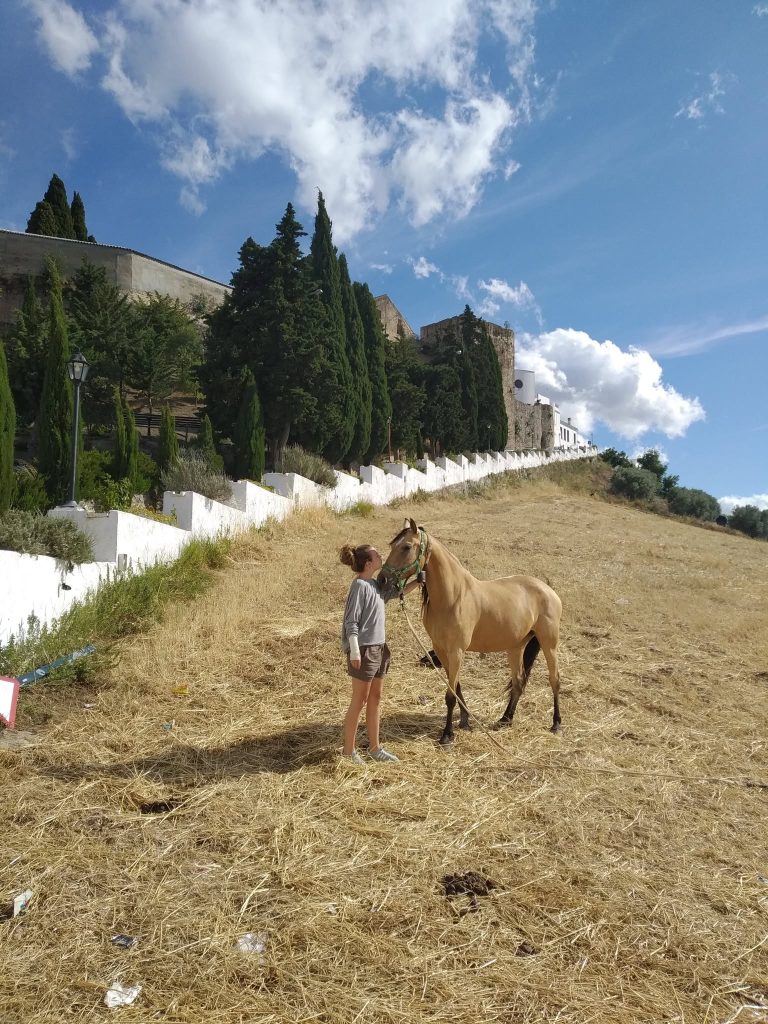
A different way of doing therapy
Equine-Assisted Psychotherapy differs from horse-based wellbeing activities in that it is psychotherapy, with an experiential and relational dimension involving horses. It provides a framework for working on different aspects of mental health within a therapeutic relationship, guided by a trained mental health professional.
The presence of horses and the naturel environment creates a different setting from talking therapy alone. The experiential dimension can take us beyond conversation, inviting observation, relationship and communication, attention to the present moment, and opportunities to explore things in a different way from talking therapy. The horse becomes a partner in the process, and what happens in this relationship can become something we observe, reflect on and explore together.

What does research say?
Research into related equine-assisted interventions is growing. Current research suggests promising results, particularly in relation to trauma and PTSD, as well as anxiety and other psychological outcomes. Studies have also suggested potential benefits for emotional regulation, social interaction and self-confidence. Qualitative research highlights positive experiences and perceived benefits, and suggests that equine-assisted approaches may offer a meaningful way of engaging in therapeutic work.
However, the field is still developing, and studies vary considerably in their methods, populations and interventions. Larger and better-standardised studies are still needed before firm conclusions can be drawn about the effectiveness of these approaches.
Are Equine Assisted Interactions a Dark Horse Bet? (2025)
Equine-Assisted Therapy in Post-Traumatic-Stress Disorder: A Systematic Review and Meta-Analysis (2023)
Psychodynamic Based Equine-Assisted Psychotherapy…: A Systematic Review (2020)
A note about Equine-Assisted Therapy
Equine-Assisted Therapy is not a legally regulated practice in the UK. The term can refer to a wide range of practices and is not necessarily used consistently across the field. Depending on the practitioner, it may describe anything from horse-based wellbeing activities to work provided by practitioners with expertise in both mental health and horses.
The right approach will depend on what you are looking for. It may therefore be worth looking beyond the label and considering the practitioner’s mental health qualifications, specific training in Equine-Assisted Psychotherapy, and experience working with horses.
Is this for me?
- Feeling overwhelmed, stressed or anxious
- Feeling stuck or disconnected
- Questioning who you are or where you are going
- Struggling with emotions, relationships, or self-esteem
- Carrying experiences from the past that still affect you today
- Having difficulties around food, body image, or your relationship with yourself
- Trying to make sense of painful or traumatic experiences
- Feeling that you connect better through experiences than through words alone
- Wanting to better understand yourself
- Simply curious
What does a session look like?
The process begins with a free 30-minute video call to get to know each other a bit, answer any questions and see whether the approach feels right.
A session lasts approximately one hour and generally takes place in three stages: observing the herd, interacting with a horse, and reflecting on the experience.
All the work takes place on the ground. There is no riding, and you do not need any previous knowledge of horses, or even any particular affinity with them.
Sessions take place in a safe environment, and I am always present. Interaction with a horse, or with the herd, can be stopped at any time. Your safety is always a priority.
The therapeutic intervention plan is co-constructed with each person according to the therapeutic goals we define together. These goals, as well as what emerges during the sessions, help determine the activities and the pace of the work.


My approach
I offer psychotherapy incorporating horses within a clinical and ethical framework.
I am a trained and experienced psychologist (see my About Me page), and my interest in psychology grew, in part, from an early interest in equine-assisted work. I have been fortunate to experience many different aspects of life with horses over the years — as an owner, rider, competitor and breeder, and through working with young horses as they began their training. While I have enjoyed all of these experiences, what has always mattered most to me is the relationship with the horse itself.
Horses have been an important part of my life since childhood, and my relationship with them has taught me a great deal. They have helped me grow and, when I was young, offered me things that the adults around me could not always offer. They have also contributed to my resilience over the years. This is part of what led me, over time, to want to make it possible for other people to experience what a relationship with a horse can offer them.
Sessions
Sessions last approximately one hour and take place on the ground.
Free 30-minute video call required before the first session.
Location
Sessions take place in a quiet natural setting. Adress to be confirmed.
What to wear
Wear comfortable clothes and shoes suitable for the outdoors.
Fees
For information about fees and to enquire about availability, please visit the Fees & Contact page.
Frequency
The frequency of sessions is agreed together, based on your needs and my availability.
Frequently Asked Questions